
UKOUG Tech15 is over, looking forward to Tech16

What a busy week! The UKOUG Tech15 conference made me busy for four days, postponing any other work and non work stuff.
As usual, I met many people actually using our products - it's always a bit strange feeling and a strong confirmation seeing people trusting their data and apps to something a developer writes:-)
And of course, seeing many old friends again was also very nice. Especially talking to Gluent guys (http://gluent.com) and seeing what they are up to was very interesting and promising - I hope they succeed in a big way and change the data landscape.

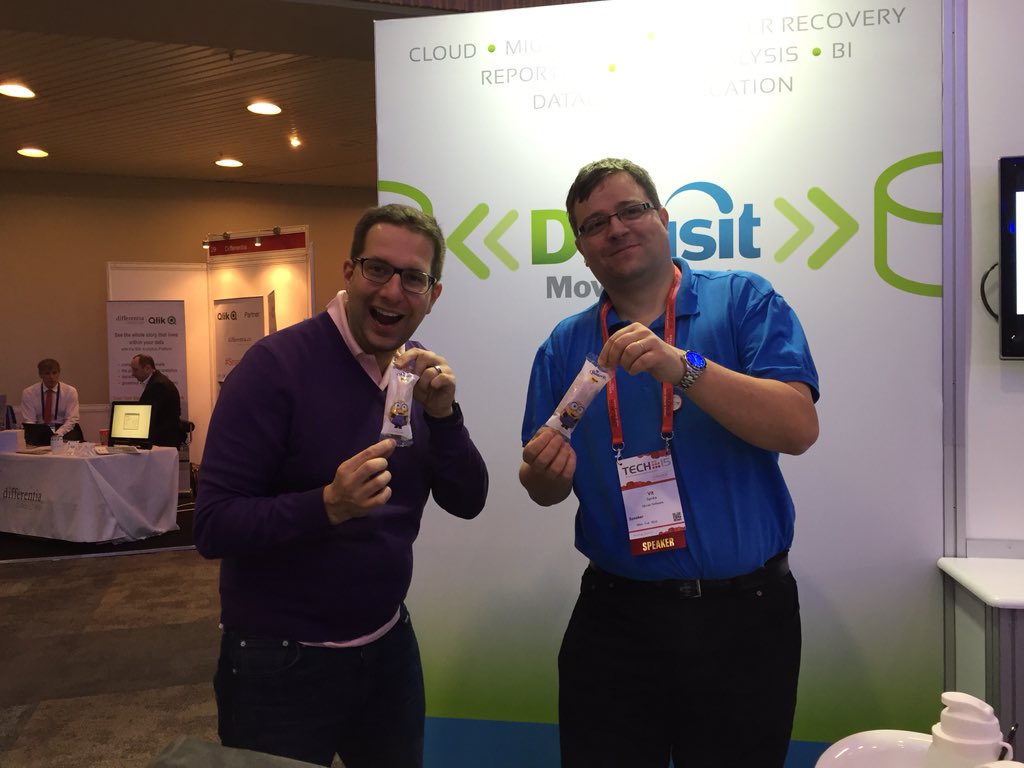
And of course, the Twinkies...
Comments

Popular posts from this blog

Filter and access predicates

More than just column projections When we look around for further pointers in the tree nodes, we find more pieces resembling the column projections we have seen so far. With some experimenting, we will find out that these are access predicates and filters. First of all, the location of these pointers is not always the same, it seems that the value at 0x34 is some kind of flag, indicating whether filters and/or access predicates are present, and where. Or whether there is just one, or more of them.  It probably also indicates what other info is present, but I have no idea what info that would be or what each value means. Resembling, but different The data we see as predicates are not columns; after all, a predicate is a condition, not a single column. But the structure is similar to what we have seen with columns, and if we follow pointers further, we eventually build a tree, and some of the leaves are indeed just column projections. After some contemplation, we realize it's...

dbms_alert on RAC

Not long time ago, I came across a usage of dbms_alert to manage running jobs. As the solution implemented must work also for RAC, I wanted to know whether dbms_alert works on RAC across instances. The documentation nor Metalink does not say anything (contrary to dbms_pipe, which does NOT work on RAC). So, if they don't warn, it should work... However, Julian Dyke says, that dbms_alert does not work and is the same as dbms_pipe (sources: http://juliandyke.com/Presentations/Presentations.html#ARoughGuideToRAC , page 17, or Pro Oracle Database 10g RAC on Linux, page 426). You know, never trust anybody, so I conducted a test case (10.2.0.3 on Linux x86_64, VMware ESX server, 2-node RAC): You will need two simultaneous sessions, I mark them with DWH1> and DWH2> here. DWH1> select instance_name from v$instance; INSTANCE_NAME ---------------- DWH1 DWH2> select instance_name from v$instance; INSTANCE_NAME ---------------- DWH2 DWH2> exec dbms_alert.register('TST'); ...

Execution plan rows

The plan As mentioned in previous post, our example is based on the sample SH schema, with an added table FOOBAR (id number, key varchar2(30)): SELECT prod_id, key FROM products CROSS JOIN foobar WHERE prod_id in (143,144,id) and id in (1,2,3); In all reverse engineering, it's good to start with something simple and to know what we to look for. Thus we want to know what the execution plan should look like; and the more unique numbers/ids we can find, the better. It's much easier to look for a number like 0x12fa1893 than for 0x0 or 0x1. The execution plan, obtained using: SELECT * FROM TABLE(DBMS_XPLAN.DISPLAY(null,null,'ALL'));  is I have added the CPU cost from the full detail of the execution plan in  v$sql_plan / x$kqlfxpl. Looking at the numbers, we also have rows (1 and 2 ... not very unique), bytes (34 / 30 / 8 - not bad) and what is not shown here, we also know object ids of the index and the table: 94765 and 92749 (nice). We did not use any...